One-liner
Stiger hides encrypted text inside ordinary-looking PNG stickers.
Press
For journalists, podcasters, newsletter writers. Email is the fastest way to reach me.
Stiger hides encrypted text inside ordinary-looking PNG stickers.
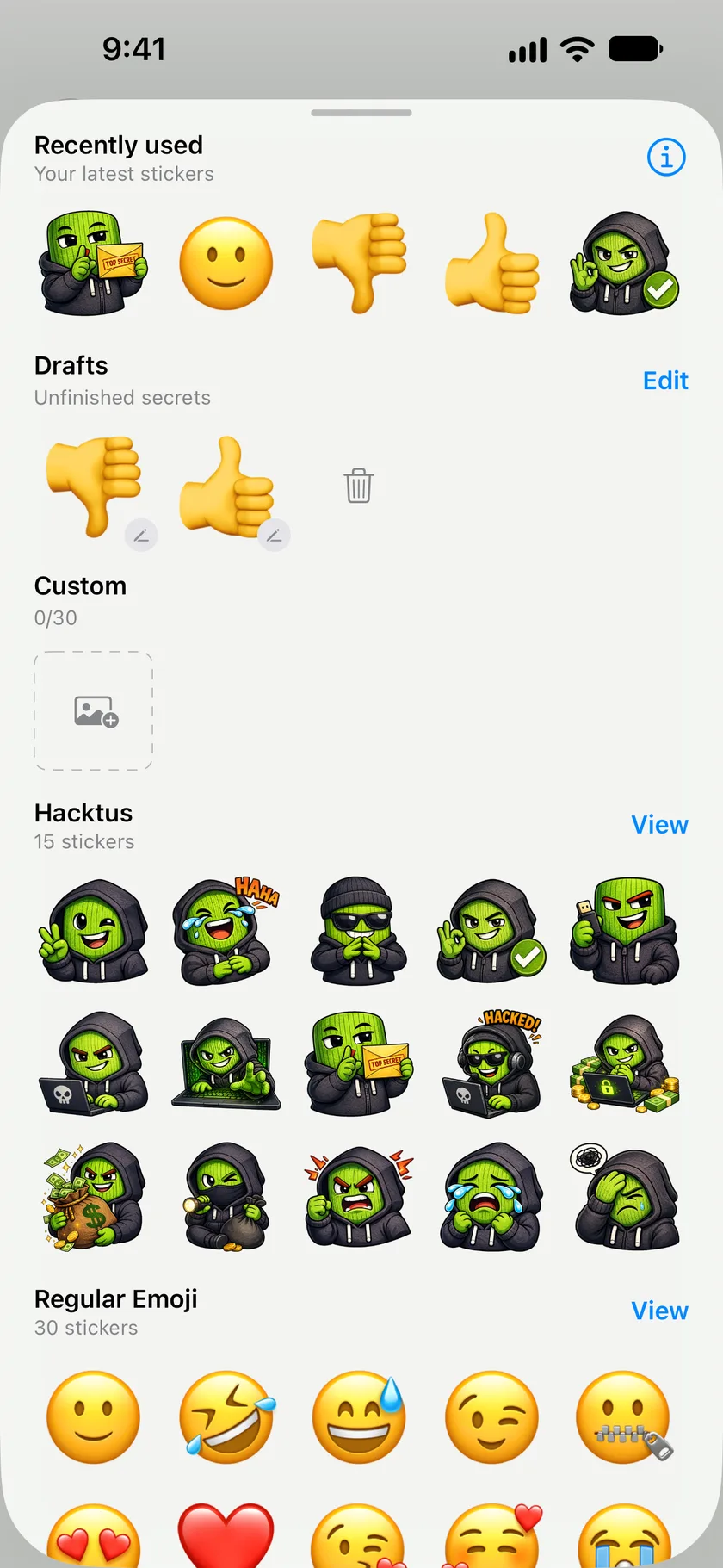
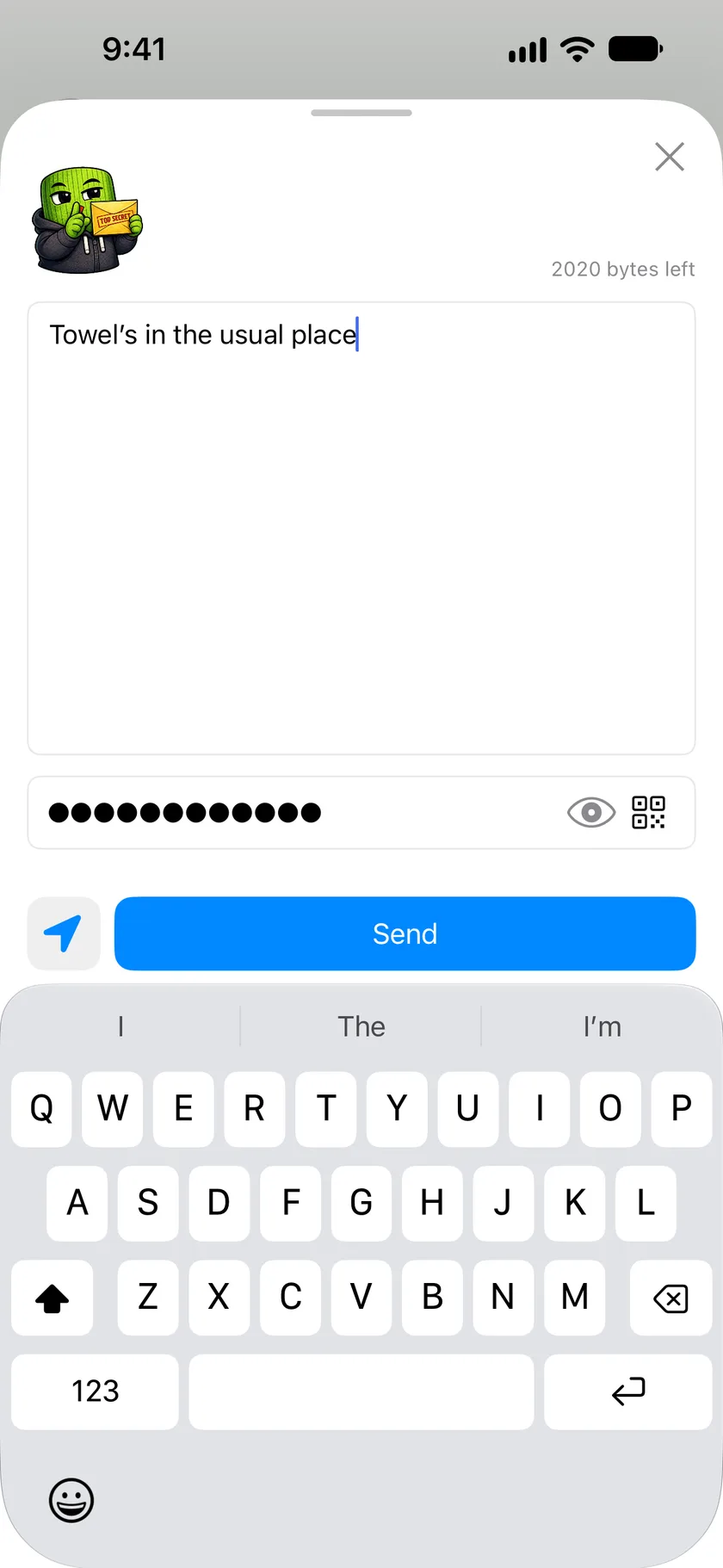
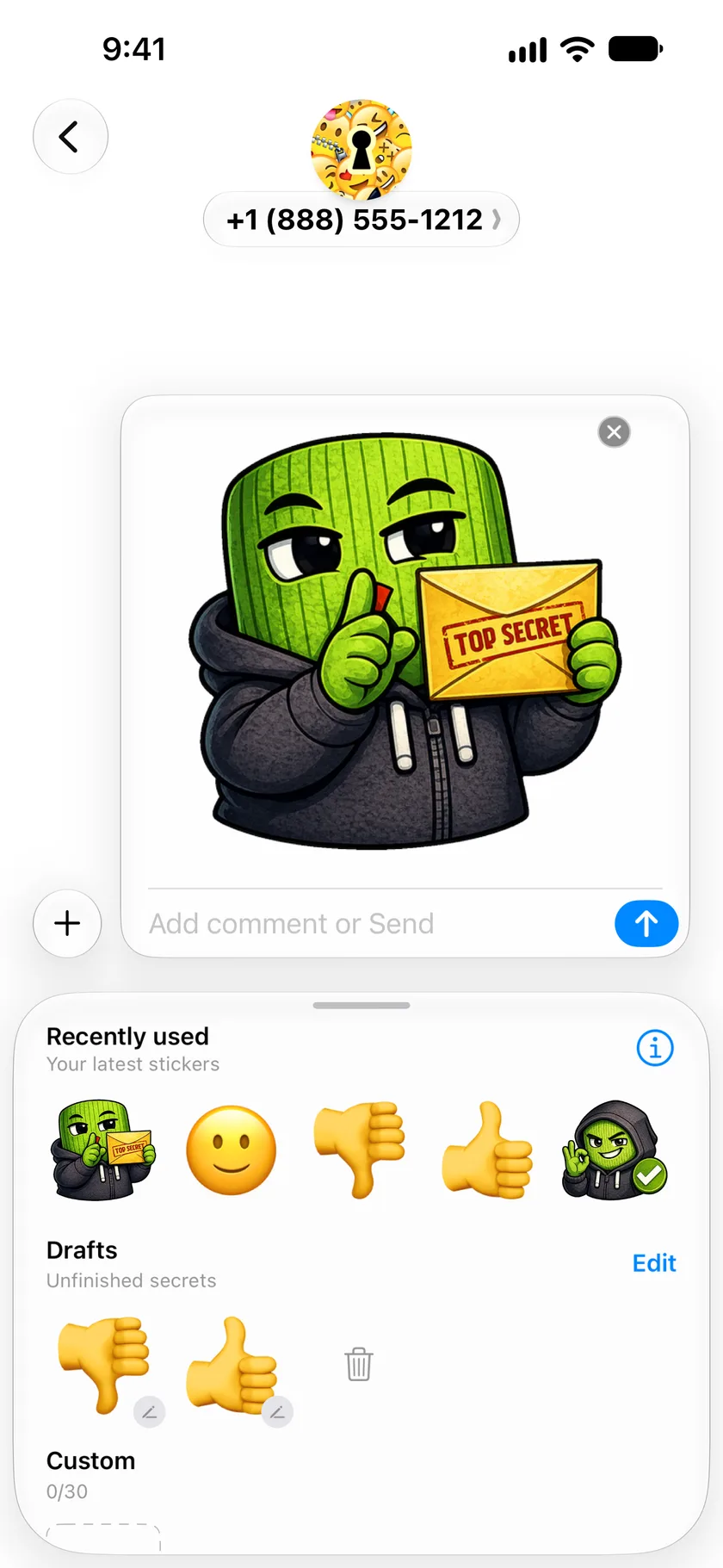
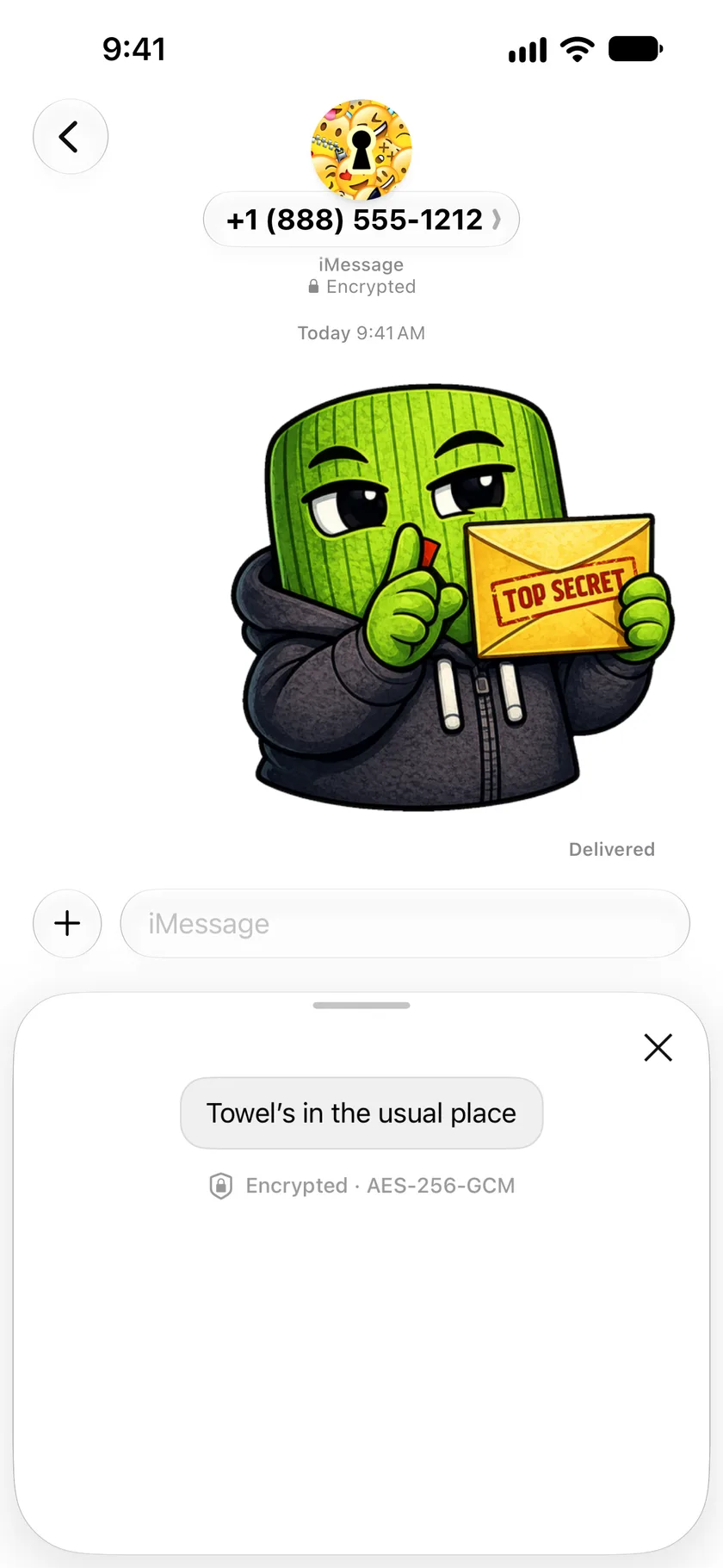
Stiger is an iOS app and iMessage extension that embeds hidden text — encrypted with Pro — into the pixels of ordinary-looking stickers. To anyone without the app it looks like an ordinary sticker; a password-locked message also needs Stiger Pro and the pre-shared password to reveal. The wire format is published in full, and two reference decoders, in Python and TypeScript, are checked against the same test vectors.
Stiger is a steganography tool for iMessage. It hides encrypted text inside the least-significant bits of ordinary-looking PNG stickers, using AES-256-GCM with PBKDF2-stretched passwords (600 000 iterations). The carrier looks like a sticker; with a password set, the message is encrypted and unreadable without the app and that password. The project publishes its threat model — including the detection limits — alongside the spec.
The product targets two audiences. People in places where mainstream messengers are restricted but iMessage still works get one more place to put a message that doesn't look like one. Privacy-aware users in open markets get a simple way to send things that shouldn't live in a chat history — passwords, addresses, sensitive notes.
Stiger is built and maintained by Pavel Khudiakov, an indie developer trading under OneGoodMan.studio. The wire format is open and documented byte-by-byte; two reference decoders — Python and TypeScript — ship with test vectors generated by the production engine. The threat model is published in plain English alongside the spec.
Stiger doesn't use Apple's sticker API (MSSticker). Each
carrier is sent as an ordinary image attachment via
MSConversation.insertAttachment. That path is the one
I've verified end-to-end: PNG bytes reach the recipient closely
enough for the LSB to survive on a current iOS. It's observed
platform behaviour, not a guarantee from Apple — if a future iOS
recompresses image attachments, decode fails cleanly and the threat
model already documents that case.
I tested MSSticker directly (May 2026, iOS 26) and
found it incompatible with hidden payloads in two independent ways:
(1) the sticker pipeline re-encodes the carrier to HEIC and
downsamples it — a 512×512 / 207 KB PNG arrives as 320×320 / 12 KB
HEIC, which destroys any LSB modification; (2) Apple does not
register public.png / public.image UTIs
on the receiver-side clipboard or drag-and-drop at all, so even
if the bytes were preserved the recipient app could not address
them. The word "sticker" throughout the product is the everyday
word for the picture, not a reference to the framework.
Signal and Telegram are excellent at protecting message contents. They are not designed to hide that a private message was sent. In places where the existence of an encrypted messenger on a phone is itself suspect, Stiger trades a different axis: the payload looks like an ordinary sticker in the chat. It arrives as an image attachment rather than a native sticker, so a closer look can tell the difference. Stiger doesn't replace those tools — it complements them for situations where contents must be private and the act of sending them should not stand out at first glance.
THREAT_MODEL.md in the public spec mirror. Plain English, lists exactly what Stiger does and does not protect against — screenshots, recompression, device compromise, lack of forward secrecy.
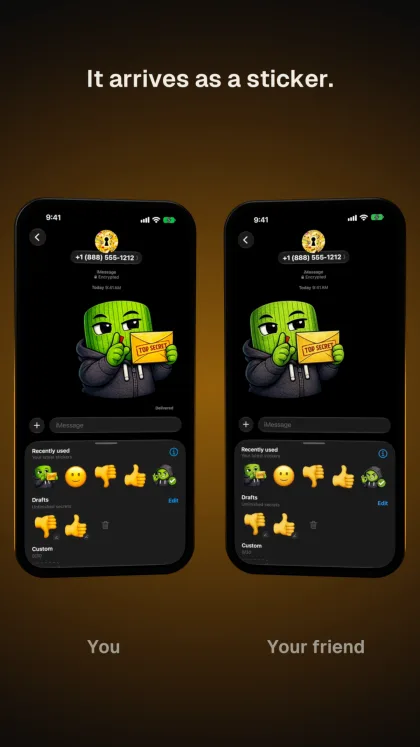 Video — sender and receiver · 18 s
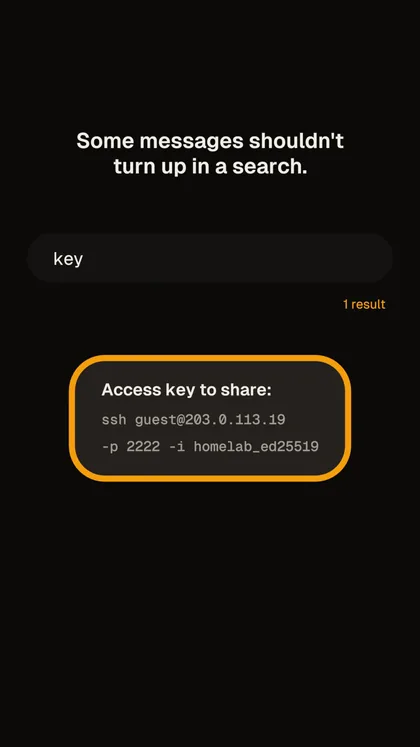 Video — hidden from search · 20 s
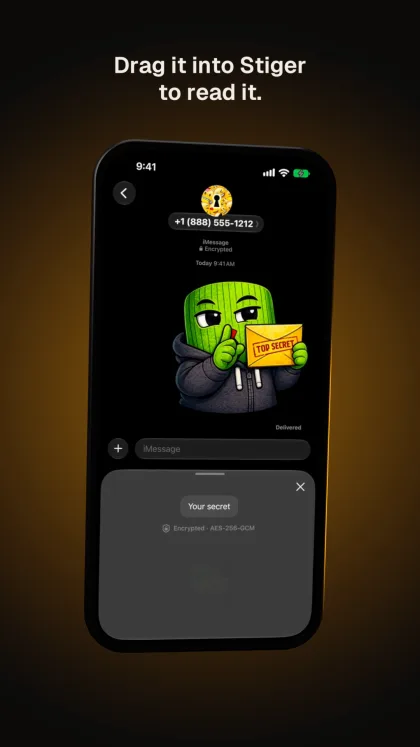 Video — the whole trip · 17 s
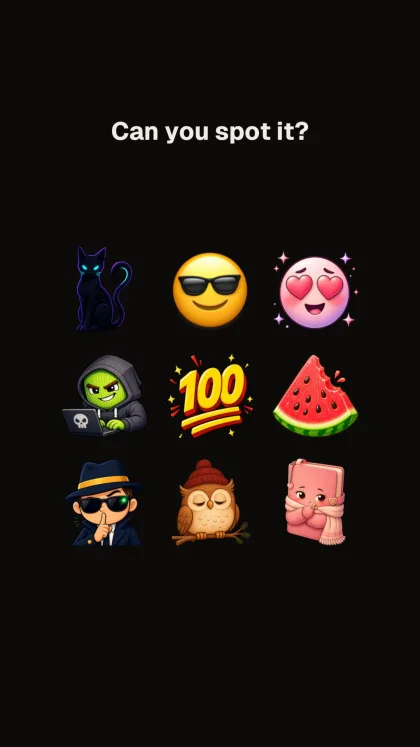 Reel — spot the secret · 11 s
 Reel — what they see · 11 s
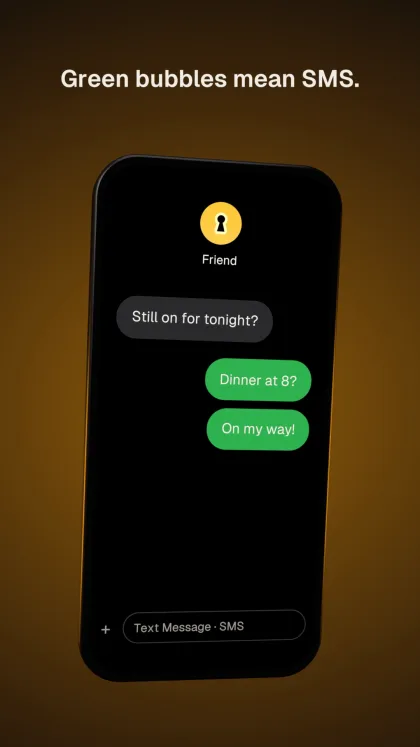 Video — turning on iMessage · 18 s
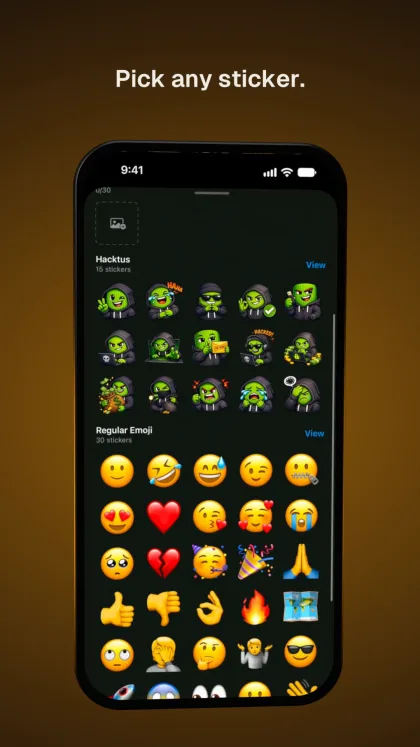 Video — how to use Stiger · 58 s
Videos are vertical 1080×1920, with sound and English captions.
A maker photo will be added at launch. For anything else — dark-mode shots, the Russian-locale set, higher resolution — email for a current asset bundle.